

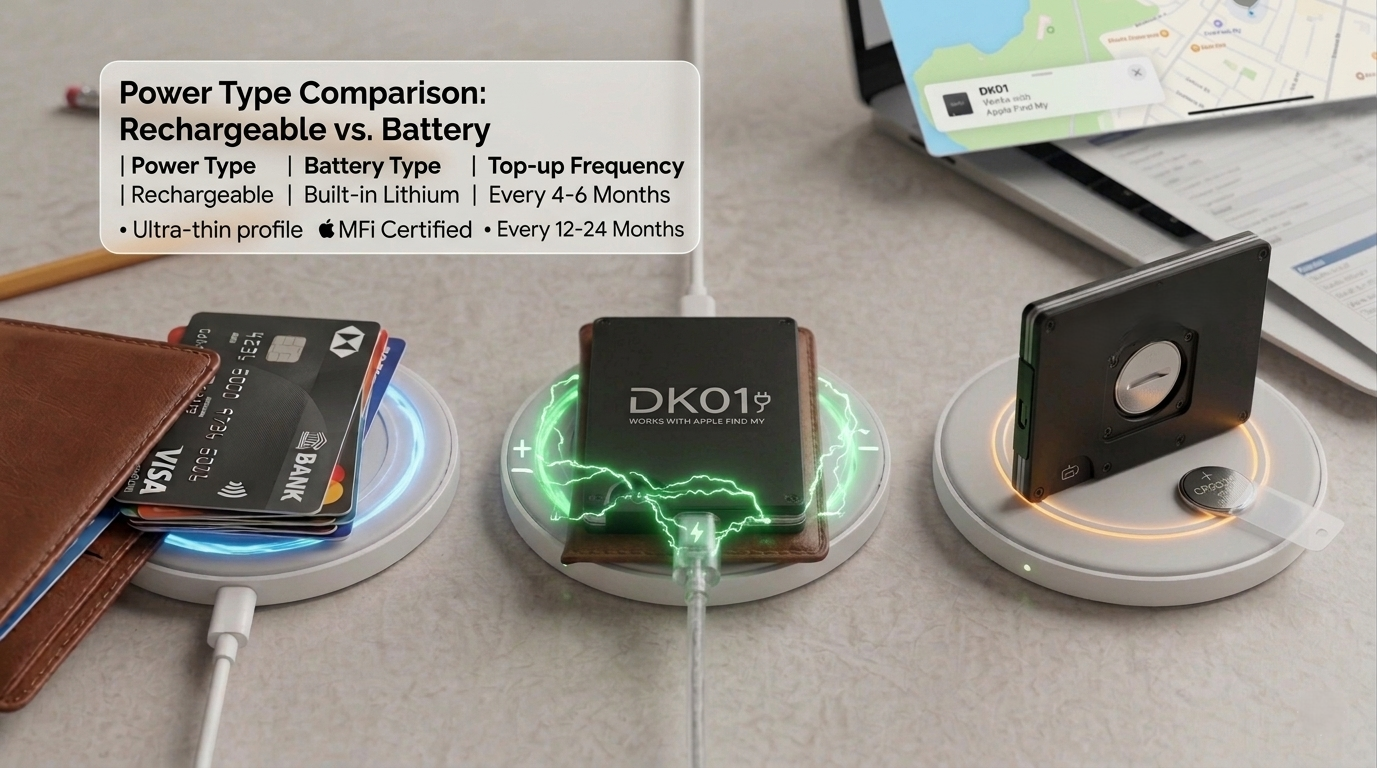
When people start comparing Rechargeable vs Battery Wallet Tracker, they usually focus on thickness and price first. Battery type tends to come as an afterthought. That is a mistake, because how your tracker card handles power will affect your experience every few months for as long as you use it.
There are two approaches on the market right now. Rechargeable cards with built-in lithium batteries that you top up wirelessly every few months. And battery-powered cards that run on replaceable coin cells for one to two years before needing a swap. Both work well. They just suit different people.
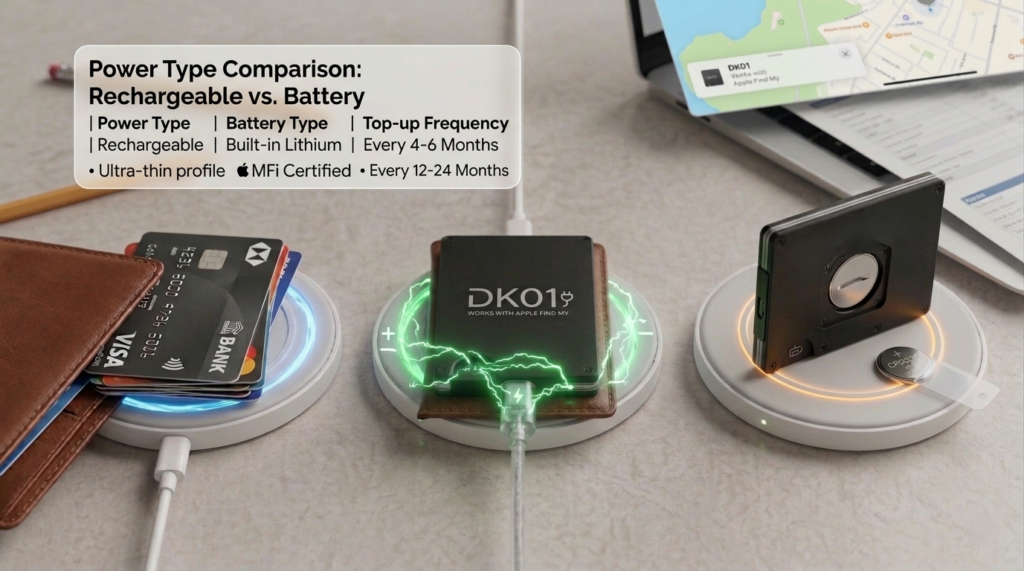
How Rechargeable Wallet Trackers Work
Cards like the DK01 have a small lithium battery sealed inside. You charge it by placing it on any standard Qi wireless pad, the same one sitting on your bedside table for your phone. The DK01 lasts around four to six months per charge. Some newer chipsets in cards like the Key Smart Smart Card Gen 3 stretch that to eleven months.
The charging process itself takes one to two hours. Most people do it overnight and never think about timing. You get a few years of use from one card, and the battery is rated for hundreds of charge cycles before any meaningful capacity drop.
Five of the seven leading wallet tracker cards in 2026 now use wireless charging. The category has clearly moved in this direction and for good reason.
How Replaceable Battery Wallet Trackers Work
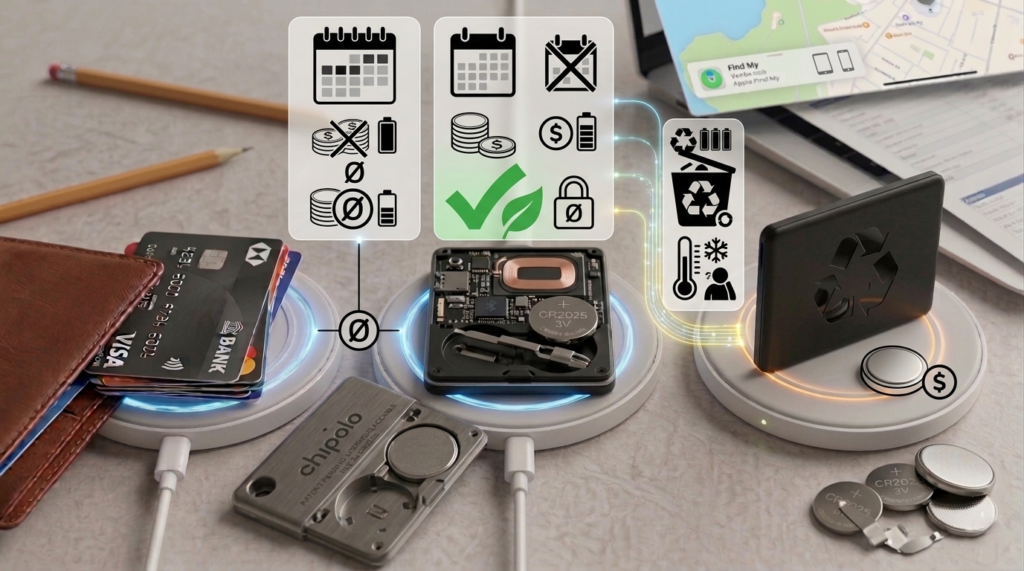
The Chipolo Card Spot runs on two CR2025 coin cell batteries rated for roughly two years. When they die, you open the card with a small tool and swap them out. CR2032 and CR2025 cells are available at any pharmacy, electronics shop, or supermarket anywhere in the world.
The Tile Slim takes a different approach with a sealed non-replaceable battery rated for three years. When it dies, you recycle the card and buy a new one. Tile offers a discount program for returning old units.
Both replaceable options share one real advantage: you genuinely do not think about them for a very long time.
Rechargeable vs Battery Wallet Tracker: The Real Differences
The honest comparison comes down to four things.
Maintenance frequency. A rechargeable card needs attention two to three times a year. A replaceable battery card needs attention once every two years, and a sealed card needs attention never, until it needs replacing entirely.
Long-term cost. Rechargeable cards cost nothing to run after purchase. Replaceable battery cards require occasional CR2025 purchases, a few dollars each time. Sealed cards require full replacement every three years.
Environmental impact. Rechargeable wins here without question. No disposable batteries, no full card disposal.
Risk of unexpected downtime. A rechargeable card that runs flat is your responsibility. Forget to charge it, and your wallet goes untracked until you do. A battery-powered card gives you years of warning-free use, though the battery can drain faster than expected in cold weather or heavy use periods.
Which Type of Person Chooses Which
People who naturally charge devices regularly, already have a wireless pad on their desk or nightstand, and prefer not buying replacement parts tend to find rechargeable cards a seamless fit. The DK01 specifically suits this profile well. It charges on your existing Qi pad, costs less than most competitors, and delivers IPX8 waterproofing alongside Apple Find My integration at a price that makes the rechargeable commitment feel low-risk.
People who travel extensively, spend long stretches away from charging pads, or simply have no interest in managing device charging find the Chipolo Card Spot more practical. Two years of use without a single charging thought is a genuinely appealing proposition.
If you have ever let your phone battery hit zero twice in one week, a sealed or replaceable battery card is probably the more honest fit for your habits.
One Thing Worth Knowing About Long Battery Claims
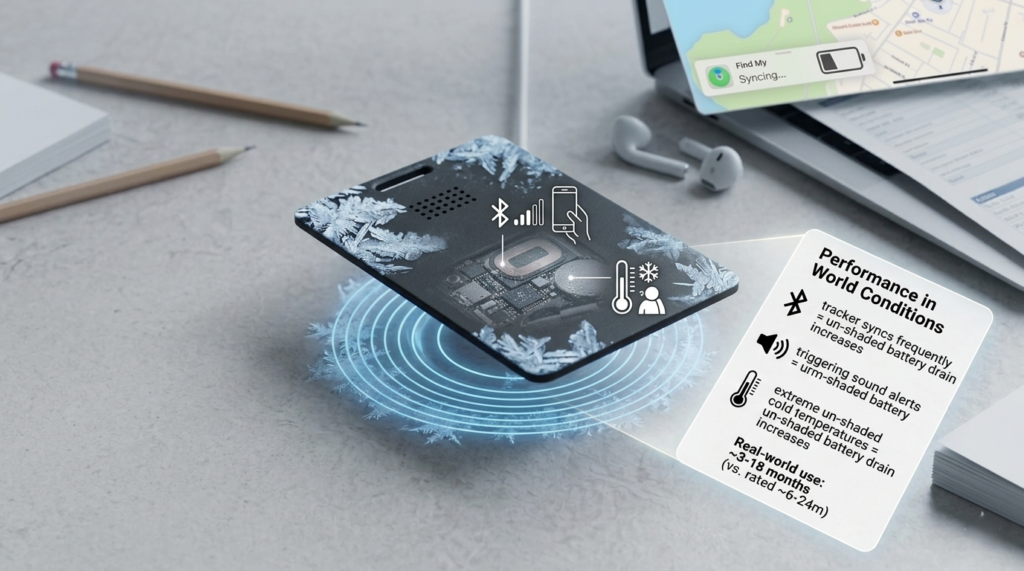
Manufacturer battery ratings are measured under standard test conditions. Real-world performance can be shorter, particularly if your tracker stays within Bluetooth range of your phone most of the day and regularly syncs, or if you frequently trigger sound alerts. Cold temperatures also reduce lithium battery performance noticeably.
A DK01 used actively in a cold city winter may need charging every three months rather than six. A Chipolo Card Spot rated at two years might land closer to eighteen months under heavy use. These are not failures. They are normal.
The Straightforward Answer
For most iPhone users in everyday situations, rechargeable is the better long-term choice. The environmental case is clear, the cost is lower over time, and modern Qi charging is passive enough that the maintenance burden barely registers.
For travellers, people who frequently go off-grid, or anyone who genuinely dislikes managing charging schedules, a replaceable battery card like the Chipolo Card Spot offers a kind of low-maintenance peace of mind that rechargeable cards cannot fully match.
Neither option will let you down if it matches your actual habits.

AG Baloch is an SEO expert, content writer, and technology educator who specializes in creating accurate, user focused content that informs and inspires.